Tampilkan postingan dengan label real food. Tampilkan semua postingan

Senin, 14 Juli 2014

Instant Pot Electronic Pressure Cooker: Two Years Later

I've had several people tell me that the Whole Health Source post that changed their lives the most was one I published in 2012-- about a pressure cooker.

In 2012, I first reviewed the Instant Pot-- a "pressure cooker for the 21st century" that also doubles as a slow cooker and rice cooker (1).  Since then, we've used it more than 400 times, and it has saved us countless hours of kitchen drudgery.  It's indispensable for my current cooking style, and a major time saver for anyone who leads a busy life but still wants to cook wholesome food at home.  It's extremely satisfying to be able to put your ingredients into the Instant Pot, push a couple of buttons, do something else until it beeps, and then eat a healthy, inexpensive, and delicious meal.

Pressure cookers are one of the most time- and energy-efficient cooking tools, but electronic versions are even more efficient than traditional stovetop pressure cookers.  They're more time-efficient because you don't have to fiddle with them-- for example, adjusting the heat.  They're more energy-efficient because 1) they stop heating when the interior has reached the appropriate pressure, meaning that they're only using energy for part of the cooking process and they hardly vent any energy-wasting steam, and 2) they're insulated well enough that the sides never get hot.

I've used my Instant Pot for a wide variety of cooking tasks, and this is what it does best:

Read more »

Senin, 26 Mei 2014

The Best Diet? It Isn’t a Diet at All: It’s Just Real Food - Study Finds


What should you do to get back in shape this Summer? Try a paleo-diet, go vegan? How about the Mediterranean diet, or even experiment with a low-carb diet? It turns out, according to a study recently published in Annual Reviews by a highly credentialed medical expert, Dr. David Katz, that the best food – is REAL food.

A recent comparison of popular diets (yes, including the Paleo diet) found none to be a “best diet” for optimal health compared with a well-balanced and generally healthy approach to eating focused on real food. Low-carb, low-fat, low-glycemic, vegan, vegetarian, Paleo and Mediterranean diets were among those compared for their health benefits. But none seemed to be as effective in providing the health benefits as author and food expert Michael Pollan’s sage advice: Eat food, not too much, mostly plants.


We all have had inclinations of eating better – whether it was to cure ourselves from a serious disease like cancer or diabetes, or for more superficial reasons, like wanting to look better in a bathing suit, but real, and dramatic changes can happen in lifespan, and the reduction of chronic illness when we eat right. Study after study has compelled us to eat more nutritious foods, and now the latest compares all the ‘popular’ or ‘fad’ diets, and finds, unequivocally, that real food still wins.
Dr. David Katz works at Yale University’s Prevention Research Center, and he rebels against a sea of disinformation about what people should eat to be healthy. He looks down on of-the-moment diet fads and dangerous crazes that many of his contemporaries – even other doctors promote without sound reason. In a recent interview, he said “I don’t care which diet is best. I care about the truth.”

The study
Katz published his findings with colleague, Stephanie Meller in a paper titled, “Can We Say What Diet Is Best for Health?” They compared all the trend diets of the day: Low carb, low fat, low glycemic, Mediterranean, mixed/balanced (DASH), Paleolithic, vegan, and elements of other diets.
Katz says that despite the prevalent promotion of these diets in mainstream media, there are few studies proving they actually work:
There have been no rigorous, long-term studies comparing contenders for best diet laurels using methodology that precludes bias and confounding. For many reasons, such studies are unlikely.”
Conversely, he found that:
A diet of minimally processed foods close to nature, predominantly plants, is decisively associated with health promotion and disease prevention.”
Among the important points made by the article are these:
  • Plant-based diets (non-GMO,organic, real plants, I might add) are nutritional powerhouses which support a wide variety of favorable health outcomes. These include lower rates of heart disease and cancer. These diets don’t just include fruits and vegetables, but real grains, nuts and seeds.
  • Katz and Meller found that ‘low-fat’ diets are no better than diets high in real, healthful fats (not fake, man-made ones). The Mediterranean diet is only successful because it contains a lower omega-6 to omega-3 ratio than the typical American diet. Americans also rely far too much on unhealthy fats like trans-fats.
  • Moderating meat intake, and alcohol improves health.
  • Increasing natural fiber improves health, including, “defense against neurodegenerative disease and preservation of cognitive function, reduced inflammation, and defense against asthma.”
  • Carbohydrate-selective diets are better than simply low-carb diets. Attention to glycemic index is important, but not the most important thing – since carrots, for example have a high glycemic index, but can cure cancer. Again, it goes back to eating real food.
  • One of the most important points of the study was this one: “if Paleolithic eating is loosely interpreted to mean a diet based mostly on meat, no meaningful interpretation of health effects is possible.”
    Katz is frustrated with the misinformation about how diet affects health:
    “It’s not just linguistic, I really at times feel like crying, when I think about that we’re paying for ignorance with human lives . . . At times, I hate the people with alphabet soup after their names who are promising the moon and the stars with certainty. I hate knowing that the next person is already rubbing his or her hands together with the next fad to make it on the bestseller list.”
    It’s a radical notion in today’s GMO-promoted, FDA-ignorant, pharmaceutical-pushing world, but real food can cure you.


    Sources: http://www.theatlantic.com/, http://naturalrevolution.org/

    Rabu, 26 Februari 2014

    Snacktime in My Kitchen

    Here is a photo of all visible food in my kitchen:
     
     
    Along the back wall, we have glass containers of raw nuts, unsalted roasted nuts, grains, and legumes.  It's easy and attractive to organize your dry foods using inexpensive 2 quart Ball jars.  They also have the advantage of being moth-proof.  On the left, we have fresh fruit and a few onions.  On the far left in the background is our hand-cranked conical burr grinder, for occasional coffee (Skerton).
     
    If I walk into my kitchen between meals, the only food available to eat without doing any cooking or reheating is unsalted nuts and fresh fruit.  There is no other snack food in the kitchen.  No chips, cookies, bars, popcorn, snack mix, candy, or anything else that's tempting and easy to grab and devour. 
     
    When it's mealtime, we eat good home-cooked food.  When it isn't mealtime, we don't have anything available that we would eat without feeling genuinely hungry.  If we do feel genuinely hungry, fresh fruit and unsalted nuts make a satisfying snack.

    This is the way of my people. 

    What's the point?  Eliminating tempting food cues from our surroundings and creating small barriers to food consumption decreases the quantity of food we eat while increasing the quality.  Engineering a food environment that discourages eating for reasons other than hunger helps match food intake to the body's true energy needs, favoring leanness and health.
     

    Rabu, 01 Januari 2014

    Free e-Book and Ideal Weight Program 2.0 Announcement


    I'm happy to announce that we're releasing a free e-book titled Why do We Gain Fat, and How do We Lose it? An Introduction to the Science of Body Fat, by Dan Pardi and myself. This is a slimmed-down version of the longer, fully referenced e-book we offer as part of the Ideal Weight Program. In it, we provide a succinct overview of the science of body fat gain and loss, and the evidence base for our program.  It also contains a schematic that ties together the various concepts in visual form. You can download it from the Dan’s Plan site by following this link to our program overview page.

    Ideal Weight Program 2.0 Upgrades

    Over the last year, Dan and I have been working hard to improve the Ideal Weight Program, both in response to user feedback and our own ideas for development.  Here are some of the new features we offer in 2014:
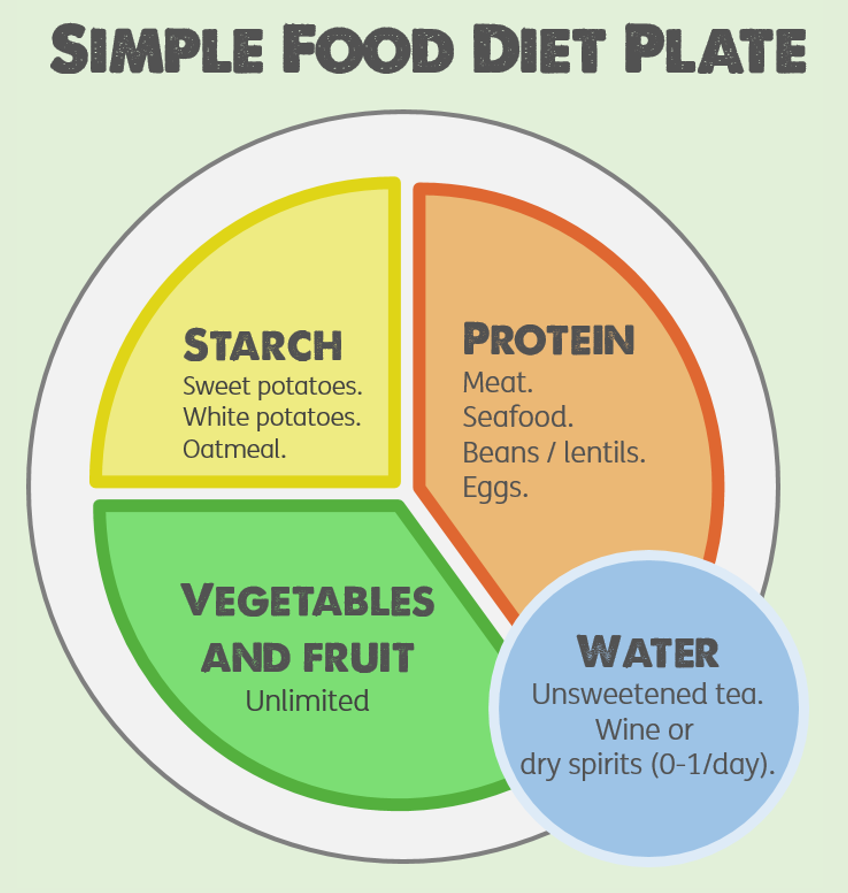
    1. Four-week meal plans and shopping lists for the FLASH diet and the Simple Food Diet, as requested by Ideal Weight Program users.  This is in addition to the recipes and cooking guides we already provide.  
    2. The Protein Unit system.  Research suggests there's an optimal amount of protein for appetite control and fat loss, depending on your height, weight, gender, and physical activity level.  Our fat loss diets are high in protein, but how do you know you're getting the right amount?  We've created a calculator that does it for you automatically, and explains how to apply your personalized Protein Unit value easily and intuitively using real food. 
    3. Diet plates.  These are visual guides to following our diets, based loosely on the intuitive USDA MyPlate design.  
    4. Cheat sheets.  Put these on your fridge to remind yourself of your diet and lifestyle guidelines, and daily protein unit goal.
    5. Updated guidance.  We've refined a few things in the diet guidance documents. 

    At a time of year when many people want to shed excess holiday pounds and start down a leaner, healthier path, we offer the Ideal Weight Program 2.0.  The program comes with a 30-day no-questions-asked refund policy so you can try it without risk.  We think you'll love this program, but if it doesn't work for you, we're happy to refund your purchase price. 


    Financial disclosure: I receive a portion of the revenue from the sale of the Ideal Weight Program.  I do not receive revenue from the sale of other products associated with Dan's Plan or the Ideal Weight Program (such as the Fitbit, cooking tools, and other programs).

    Senin, 04 November 2013

    Buckwheat Crepes Revisited

    One of my most popular posts of all time was a recipe I published in 2010 for sourdough buckwheat crepes (1).  I developed this recipe to provide an easy, nutritious, and gluten-free alternative to flour-based crepes.  It requires no equipment besides a blender.  It's totally different from the traditional buckwheat crepes that are eaten in Brittany, in part because it's not really a crepe (I don't know what else to call it, maybe a savory pancake?).  I find these very satisfying, and they're incredibly easy to make.  They're especially delicious with fresh goat cheese, or scrambled eggs with vegetables, but they go with almost anything.  Chris Kresser also developed his own version of the recipe, which is fluffier than mine, and more like a traditional pancake (2).

    Buckwheat is an exceptionally nutritious pseudograin that's rich in complete protein and minerals.  In contrast to most whole grains, which have low mineral availability due to phytic acid, buckwheat contains a high level of the phytic acid-degrading enzyme phytase.  This makes buckwheat an excellent source of easily absorbed minerals, as long as you prepare it correctly!  Phytase enzyme works best in an acidic environment, which may be part of the reason why so many cultures use sour fermentation to prepare grain foods.  My original recipe included a sour fermentation step.

    But there's a problem here.  Buckwheat doesn't ferment very well.  Whether it's because it doesn't contain the right carbohydrates, or the right bacteria, I don't know, but it spoils rapidly if you ferment it more than a little bit (using a strong sourdough starter helps though).  Others have told me the same.  So here's my confession: I stopped fermenting my buckwheat batter about a year ago.  And it tastes better.

    Read more »

    Minggu, 03 Agustus 2008

    Hunting

    Like 99.9% of the world's population, I am mostly dependent on agriculture for my food. It's fun to pretend sometimes though. I enjoy foraging for berries, mushrooms and nuts.

    Last week, I went crabbing in the San Juan islands. We caught our limit of meaty dungeness crabs every day we put the pots out. If we had been working harder at it (and it was legal), we could easily have caught enough crabs to feed ourselves completely. We cooked them fresh and ate some the same day. We extracted the meat from the rest, and made an amazing crab bisque using a stock made from the shells, and lots of cream.

    Here's a "hunting photo". No smiling allowed; I had to look tough...


    Selasa, 24 Juni 2008

    Real Food VIII: Ghee

    All this talk about butter is making me hungry. Richard mentioned in the comments that he bought some ghee recently and has been enjoying it, so I thought I'd post a recipe. Ghee is the Hindi word for clarified butter. It's butter that has had everything removed but the fat. Rich in fat-soluble vitamins and lacking the sometimes problematic lactose and casein, ghee has rightfully been considered a health food in India since ancient times.

    Another advantage of ghee is its high smoke point, which is higher than butter because it doesn't contain any protein or sugars. Consequently, food sauteed in ghee has a clean, rich taste.

    The recipe is simple but touchy. I recommend using the best butter you can get your hands on. 100% grass-fed, unsalted cultured butter is the best.

    Ingredient and materials
    • Butter (1 lb minimum)
    • Wide-mouth glass jars
    • Cheesecloth
    • Rubber bands
    Recipe
    1. Place the butter in a saucepan and turn the heat to medium until it's melted.
    2. Once it begins to boil, turn the heat down to low. It's very important to calibrate the heat correctly. Typically, you will want the burner on its lowest setting. The idea is to evaporate the water without burning the oil. It should boil, but slowly.
    3. The melted butter starts out cloudy but gradually clears up as the water evaporates. At the same time, a crust will form on the surface of the ghee and the bottom of the pan. Keep the heat very low.
    4. Push a portion of the top crust to the side with a spoon to see inside of the saucepan. When the butter looks clear and bubbles only rise from the bottom every few seconds, it's done. You have to be very careful because once the water has evaporated, the fat heats up quickly and burns the crust. This gives the ghee an acrid flavor and color. Make sure to handle the pot cautiously, because hot oil can give severe burns.
    5. Allow the ghee to cool until it's warm but not hot. Place a piece of cheesecloth over the lid of your jar. Secure it with a rubber band. Pour the ghee through the cheesecloth, into the jar.
    6. Store ghee in the refrigerator or at room temperature. It keeps much longer than butter.
    The picture above is of my last batch of ghee.